 Novram
DDR5 architecture explained begins with a practical question: what changes when a buyer moves beyond DDR4? The answer is more than a higher data rate. DDR5 divides a DIMM into two independent 32-bit channels, adds on-die error correction, and shifts power management onto the module. These details affect bandwidth, power delivery, compatibility, and system design. They also explain why a DDR5 module cannot simply replace DDR4 in an older motherboard.
For global buyers, the architecture matters at the point of purchase. A server planner may compare capacity per module and platform support. A workstation buyer may focus on memory speed, latency, and the processor’s supported configurations. Check the motherboard’s qualified memory list, the CPU specifications, and the module’s voltage and capacity. A label alone is not enough.
Jim Handy, a semiconductor industry analyst at Objective Analysis, is a relevant expert voice on memory-market decisions. However, no source text or interview was provided to verify his exact words, so I will not invent a quotation or present a paraphrase as a direct quote. That distinction matters. DDR5 specifications can also vary by module type and system platform, and headline transfer rates do not guarantee identical real-world performance. A careful buyer should compare complete system configurations, not isolated module claims. This guide explains the architecture, highlights practical trade-offs, and identifies questions worth asking suppliers. Some details are easy to overlook. That deserves a second look.
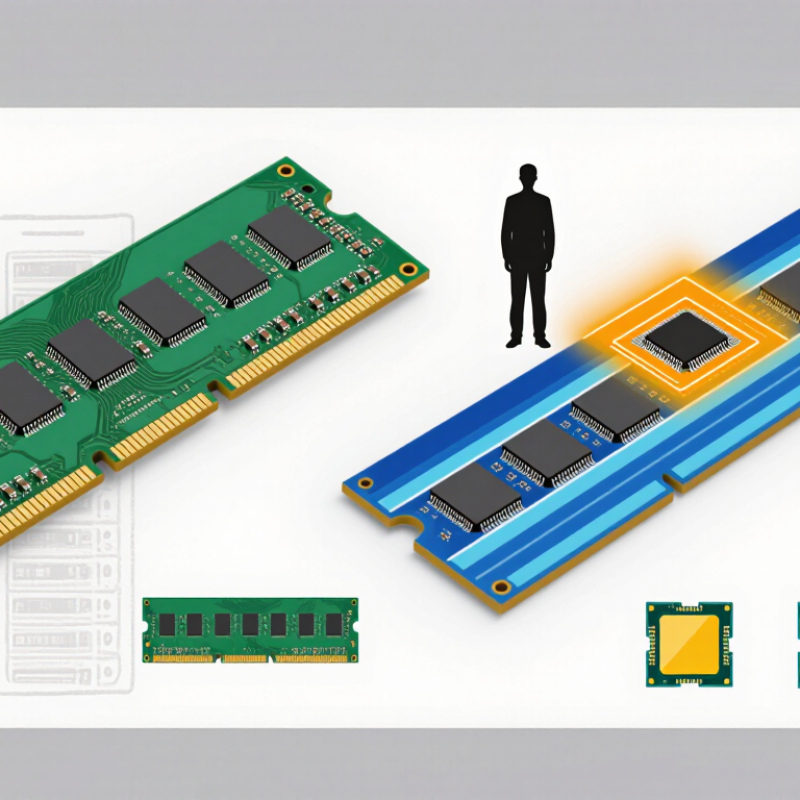
DDR5 is the fifth generation of double data rate memory, designed to move more data per second than earlier memory generations. It transfers data on both edges of a clock signal, helping processors receive information at higher rates. More bandwidth, not magic. Faster memory cannot make every application feel faster.
A standard DDR5 desktop module divides its data path into two independent 32-bit channels. This can improve access efficiency, especially when several tasks request data at once. The module also includes power-management circuitry, while its lower operating voltage helps manage power use. On-die error correction can detect and correct certain internal memory errors, but it does not replace system-level error-correcting memory.
DDR5 matters in modern computers because processors, graphics systems, and demanding creative workloads all depend on steady data flow. It can help with large files, multitasking, and integrated graphics that share system memory. Yet the result depends on the processor, motherboard, memory configuration, and software. Higher transfer rates do not automatically mean lower latency, a detail buyers sometimes overlook. Real performance is less tidy than a specification sheet suggests.
| Architecture Dimension | DDR5 Fundamental | What It Means for Buyers |
|---|---|---|
| Memory generation | DDR5 is the fifth generation of Double Data Rate SDRAM, standardized for systems that need higher memory bandwidth and capacity growth. | Confirm that the processor and motherboard support DDR5. DDR5 modules are not interchangeable with DDR4 modules because their electrical and physical specifications differ. |
| Data rate | DDR5 transfers data on both edges of the clock signal. Its transfer rate is expressed in megatransfers per second (MT/s); 4,800 MT/s was the initial standard data rate. | Compare modules using MT/s and check the platform’s supported memory speeds. The speed a system achieves can depend on the processor, motherboard, module configuration, and firmware settings. |
| Prefetch and burst | DDR5 uses a 16n prefetch architecture and a standard burst length of 16, moving data in larger bursts than earlier DDR generations. | These mechanisms help supply data efficiently at higher transfer rates. They do not, on their own, guarantee lower application latency. |
| Module channels | A standard DDR5 module divides its data interface into two independent 32-bit subchannels, for 64 data bits in total. | The narrower subchannels can allow more independent memory operations. Do not confuse this module-level arrangement with the number of memory channels supported by a processor. |
| Banks and bank groups | DDR5 devices organize memory into multiple banks and bank groups. A common organization has 32 banks arranged as eight groups of four. | Bank organization supports parallel access and scheduling. Exact device organization can vary with memory density and device configuration. |
| Operating voltage | The nominal DDR5 SDRAM supply voltage is 1.1 V. | Use modules rated for the system and follow the platform’s specifications. Voltage and performance settings beyond standard operating conditions may require compatible hardware and configuration. |
| Power management | DDR5 moves key power-management functions to the module through an on-module power management integrated circuit (PMIC). | Module-level power management is part of the DDR5 design. Buyers should check module specifications and system compatibility rather than assuming every module has identical power features. |
| On-die ECC | DDR5 devices include on-die error-correcting code (ECC) to help detect and correct certain errors within the memory chip. | On-die ECC is not the same as system-level ECC memory. Systems that require end-to-end memory error correction must support and use compatible ECC modules and platform features. |
| Capacity and density | DDR5 supports continuing increases in memory-device density and module capacity as compatible components and platform designs become available. | There is no single capacity limit that applies to every DDR5 system. Check the processor and motherboard documentation for supported module capacities, ranks, and total memory. |
| Latency | CAS latency (CL) is measured in clock cycles, while real access time also depends on transfer rate and other timing parameters. | Compare full timing specifications and system workload, not CL alone. A higher data rate does not automatically mean lower total memory latency. |
| Role in modern computing | Higher bandwidth and scalable capacity make DDR5 useful for current desktop, workstation, server, and other computing platforms that support it. | Choose capacity and configuration based on workload requirements. Applications such as data processing, virtualization, and content creation may benefit from additional memory, subject to platform support. |
| Buyer compatibility checklist | Key factors include module form factor, supported data rate, capacity, rank arrangement, ECC requirements, and system-specific compatibility. | Verify the exact system specification before purchasing. A DDR5 label alone does not ensure that a module will fit or operate at its rated speed in every device. |
Specifications and supported configurations can vary by memory device, module type, and platform. Check the relevant system and module documentation before purchase.
A narrow circuit board holds DRAM packages and connects through gold-plated edge contacts. It may also include a power-management chip, an SPD hub, and a temperature sensor.
It helps each DRAM chip manage certain internal errors. It does not replace system-level error correction. The distinction is easy to miss.
It stores configuration information that the computer reads during startup. This helps the system identify the module’s settings.
No. Some modules include one, but component layouts vary. Check the module documentation instead of relying on a diagram.
Compare its capacity, speed, and form factor with the motherboard guidance. Also verify processor, motherboard, and BIOS support together.
No. Higher advertised speeds may need platform support and adjusted settings. A fast label alone proves little.
Check capacity per module, rank, error-correction support, and validated module lists. Review warranty terms, lead times, and batch consistency too.
Results can differ in a hot, tightly packed chassis or a mixed-vendor setup. Ask for test conditions, not just peak bandwidth claims. I might still overlook that gap.
This overview of DDR5 architecture explained introduces the memory standard’s role in modern computing, where faster data access and greater capacity support demanding workloads across personal computers, servers, and other systems. It outlines the main parts of a DDR5 memory module, including its memory chips, module circuit board, and supporting power and control components, then describes how architectural changes can improve bandwidth, capacity, and energy efficiency compared with earlier generations.
The article also considers China’s DDR5 supply chain and manufacturing landscape, from component production to module assembly and quality testing. For global buyers, it highlights practical comparison factors such as performance specifications, module capacity, compatibility, power requirements, reliability, and supplier consistency. Understanding these details can help buyers evaluate products for their intended systems and make informed decisions based on technical needs, dependable supply, and overall value.
