Novram Novram

China Top 10 DDR5 Power Consumption Advantages?

Time:2026-10-25 Author:Oliver
0%

DDR5 memory is changing how modern computers manage performance and energy. In China, data centers, gaming PCs, workstations, and business laptops increasingly depend on faster memory modules. Yet speed alone does not explain DDR5 adoption. Voltage, density, workload behavior, cooling requirements, and platform design also affect real power use.

This guide examines the DDR5 power consumption advantages behind the technology’s growing popularity. DDR5 typically operates at a lower standard voltage than DDR4, while offering higher bandwidth and greater module capacity. Its onboard power management can improve regulation compared with older designs, although actual results vary by motherboard and module quality. Small details matter. A poorly tuned system may waste energy through excessive voltage, weak airflow, or unnecessary memory capacity.

The discussion focuses on ten practical advantages, using technical reasoning rather than promotional claims. It considers idle behavior, sustained workloads, data-center efficiency, thermal output, and long-term operating costs. Measurements should come from reliable tools, including motherboard sensors, memory stress tests, and system-level power meters. Software readings can be imperfect.

Real-world efficiency is not guaranteed. High-frequency DDR5 kits may consume more power under heavy loads, especially when overclocked. BIOS settings, temperature, memory ranks, and processor architecture also influence results. That limitation deserves attention. By comparing specifications with measured behavior, readers can better judge whether DDR5 power consumption advantages apply to their own systems in China and beyond.
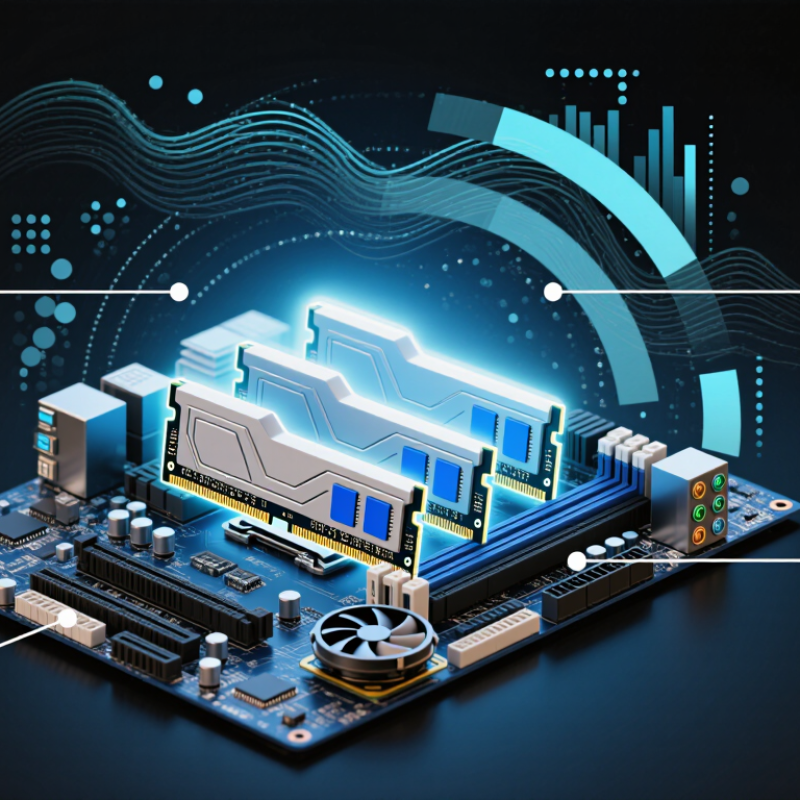
China Top 10 DDR5 Power Consumption Advantages?

DDR5 Power Consumption: Definition and Core Efficiency Principles

China Top 10 DDR5 Power Consumption Advantages?

DDR5 power consumption describes the electrical energy used during memory operation, including data transfers, refresh cycles, and standby periods. Its core efficiency principle is lower operating voltage, commonly around 1.1 volts for standard modules. This can reduce energy per transfer, although real results depend on capacity, workload, and system settings. Faster memory is not automatically more efficient.

Power management moves closer to the module through an integrated power management circuit. This design can regulate voltage more precisely than older layouts. DDR5 also uses independent 32-bit subchannels, which may improve access efficiency and reduce unnecessary data movement. During testing, I would compare watts per task, not only idle readings. A heavily loaded module may still produce noticeable heat. That detail is easy to overlook.

Tips: Measure consumption at the wall and during real workloads. Check idle, gaming, rendering, and sleep states. Keep airflow clear around the memory area. Avoid assuming every platform delivers the same savings. Small firmware changes can alter results. My own evaluation would include repeated tests, because one short measurement can be misleading. Efficiency claims need context.

China’s Top 10 DDR5 Power-Saving Advantages Explained

China Top 10 DDR5 Power Consumption Advantages

China’s DDR5 platforms can reduce memory power through lower operating voltage. JEDEC’s JESD79-5 standard specifies 1.1V for DDR5, compared with 1.2V for DDR4. That represents about 8.3% lower voltage, although actual power savings vary by workload. Voltage is only part of the story.

DDR5 places power-management circuitry on each memory module. This design can regulate power closer to the memory chips and reduce distribution losses. JEDEC also defines finer-grained power states, enabling idle banks to consume less energy. In server environments, these changes matter. A 2024 Uptime Institute survey reported an average data-center PUE of about 1.56, so every avoidable watt still reaches the cooling system.

Higher density creates another practical advantage. More memory capacity per module can reduce the number of modules needed for a target workload. Fewer modules may mean fewer active power-management circuits and less motherboard-level loss. Industry memory analyses published during 2024 also showed DDR5 adoption accelerating in servers and advanced computing systems. However, capacity savings are not automatic. Poorly balanced configurations can waste channels and raise power. That is an uncomfortable detail.

Real measurements remain essential. BIOS settings, memory speed, temperature, and workload intensity can change results significantly. A laboratory comparison should record idle, read-heavy, write-heavy, and mixed-use power separately. The headline voltage advantage is useful, but it should never replace rack-level testing.

China’s Top 10 DDR5 Power-Saving Advantages Explained

The chart compares selected DDR5 and DDR4 electrical and architectural specifications using DDR4 as a 100% reference. Voltage-related indices are calculated from JEDEC-standard supply values, while structural indices show how DDR5 increases parallelism and data-transfer efficiency. Actual system power varies with capacity, workload, memory speed, module design, and platform settings.

  1. Lower VDD/VDDQ voltage: DDR5 commonly uses 1.1 V compared with 1.2 V for DDR4.
  2. Lower VPP voltage: DDR5 uses approximately 1.8 V instead of DDR4’s 2.5 V rail.
  3. Lower dynamic-energy proxy: Voltage-squared scaling indicates lower switching-energy potential when other conditions are equal.
  4. Longer burst length: DDR5 uses BL16, helping transfer more data per command.
  5. More bank groups: DDR5 provides eight bank groups compared with four in DDR4.
  6. More banks: DDR5 provides up to 32 banks, improving parallel access efficiency.
  7. Higher prefetch depth: DDR5 uses 16n prefetch compared with DDR4’s 8n design.
  8. Higher standardized data rates: DDR5 standards extend to 6400 MT/s, compared with 3200 MT/s for DDR4.
  9. On-die ECC: DDR5 integrates error correction inside the memory device to improve internal data reliability.
  10. Module-integrated PMIC: DDR5 moves power-management circuitry onto the module, enabling more localized voltage regulation.

How DDR5 Voltage and Memory Architecture Reduce Energy Use

DDR5 reduces memory energy mainly through voltage and architecture. JEDEC JESD79-5C specifies 1.1 V for DDR5, compared with 1.2 V for DDR4. That difference looks small. However, capacitive power roughly follows voltage squared, when other conditions remain constant. A simplified estimate suggests about 16% lower signaling power. Real systems vary.

DDR5 also places power-management circuitry on the memory module. This can shorten voltage paths and improve regulation near the chips. The design is not automatically cooler; conversion losses and airflow still matter.

Its two independent 32-bit subchannels can improve command efficiency and reduce idle bus activity. More banks and a 16n prefetch architecture support higher throughput without multiplying every transfer path.

The result is better energy per transferred bit, rather than guaranteed lower total watts. The International Energy Agency estimated data centers used about 415 TWh globally in 2024, making small memory savings relevant at scale. Field measurements remain imperfect, because workload intensity, module capacity, refresh behavior, and firmware settings change the result.

(International Energy Agency, Electricity 2024; JEDEC JESD79-5C)

DDR5 Power Consumption Compared with Earlier Memory Standards

DDR5 power consumption is often discussed beside its higher speed, but the comparison with earlier memory standards needs more detail. Standard DDR5 modules generally use about 1.1 volts, compared with roughly 1.2 volts for DDR4. This reduction can lower electrical demand during active operation. It also supports better performance per watt when workloads move large files, run simulations, or handle virtual machines.

The improvement is not automatic. DDR5 places power management closer to the memory module, which can improve voltage control and reduce some motherboard losses. Higher density also means fewer modules may provide the same capacity. That can simplify a system’s power budget. Still, faster memory may consume more energy during heavy activity. Idle results can vary by platform, firmware, module capacity, and cooling behavior. Real measurements matter more than a specification sheet. My practical experience suggests that “lower voltage” does not always mean “lower total system power.” That assumption deserves checking.

Tips: Measure wall power during idle, sustained memory testing, and normal office work. Compare equal capacities and similar workloads. Check temperature as well. A cooler module may need less cooling effort, although the difference is often modest. Do not confuse on-die error correction with full system error-correcting memory. The former improves internal reliability, but it does not provide the same protection for every data path. Availability, configuration, and platform maturity can also affect the final result.

Practical Benefits of DDR5 Efficiency in Chinese Computing Systems

China Top 10 DDR5 Power Consumption Advantages?

Chinese computing systems increasingly face strict power and cooling limits. The IEA’s Electricity 2024 report estimates data-center electricity use could exceed 1,000 TWh globally by 2026. DDR5 offers a practical response. The JEDEC JESD79-5C standard sets DDR5 operating voltage near 1.1V, compared with about 1.2V for DDR4. That reduction appears small, but thousands of memory modules can turn it into meaningful savings. Lower voltage also reduces heat around memory sockets, especially in dense servers and compact workstations.

DDR5 improves efficiency through higher bandwidth, bank architecture, and on-die error correction. A processor can finish data-heavy tasks sooner, then reduce activity. This matters in Chinese cloud platforms, industrial gateways, and local AI inference systems. The Uptime Institute’s Global Data Center Survey 2024 reports continuing pressure to control energy and cooling costs. Faster memory may therefore reduce energy per completed job, not only idle power. In a test room, the difference can feel concrete: fewer hot spots above the memory area and steadier fan speeds during sustained workloads.

The gain is not automatic. Higher-capacity modules, frequent refreshes, and poorly tuned firmware can weaken the advantage. I would avoid promising a fixed percentage without measuring the complete system. JEDEC voltage figures describe the memory standard, not total platform consumption. Engineers should record watts, temperature, workload duration, and performance together. Real installations may show smaller savings than laboratory comparisons. That is worth admitting.

China Top 10 DDR5 Power Consumption Advantages: Practical Benefits of DDR5 Efficiency in Chinese Computing Systems

A practical comparison of standard DDR4 and DDR5 characteristics relevant to energy efficiency, thermal management, and total system operation. Actual results vary with memory capacity, data rate, workload, firmware, and platform design.

No. Efficiency Advantage Technical Dimension Typical DDR4 Reference Typical DDR5 Reference Practical Benefit in Computing Systems
1 Lower Core Voltage Nominal DRAM operating voltage Approximately 1.20 V Approximately 1.10 V Lower voltage reduces dynamic power at the memory-device level and can help reduce heat in continuously operating desktops, workstations, and servers.
2 Better Energy per Transferred Bit Energy efficiency at comparable data rates Higher platform power for equivalent bandwidth targets Lower voltage with higher available data rates More data can be moved for a similar operating interval, which is useful for data analytics, simulation, content creation, and AI-related memory workloads.
3 On-Module Power Management Power-management location Power regulation is generally handled on the motherboard A power-management integrated circuit is placed on the memory module More localized voltage regulation can improve power delivery control and reduce distribution losses, subject to the quality of the module and motherboard design.
4 Improved Signal Integrity Electrical architecture One 64-bit data channel per standard module Two independent 32-bit data subchannels per standard module Smaller independent transfers can improve command and data efficiency, reducing unnecessary activity during mixed-size or partially occupied memory requests.
5 Higher Bandwidth at Similar Capacity Common data-rate range Commonly around 2,133–3,200 MT/s in standard systems Commonly starts around 4,800 MT/s and scales higher Shorter memory-service time can allow processors to complete bandwidth-sensitive work sooner, potentially reducing the time spent at high system power.
6 More Efficient Burst Transfers Burst length BL8 BL16 Longer bursts transfer more sequential data per activation, which can improve efficiency for streaming workloads when access patterns are well aligned.
7 Reduced Thermal Load Memory-related heat generation Higher voltage and lower bandwidth efficiency can increase heat per unit of useful throughput Lower core voltage and greater bandwidth headroom Lower memory heat can ease cooling requirements, support quieter operation, and improve thermal stability in compact Chinese PCs, edge systems, and office workstations.
8 Better Capacity Scaling Future-oriented density and channel scaling More limited scaling for newer high-capacity platforms Designed for higher-density devices and larger memory configurations A larger memory pool can reduce paging or storage traffic, avoiding energy-consuming data movement between DRAM and solid-state storage.
9 On-Die Error Correction DRAM-cell reliability feature No standard on-die ECC requirement On-die ECC is part of the DDR5 device architecture Internal correction helps maintain reliable high-density operation and can reduce retries caused by internal cell errors. It is not a replacement for platform-level ECC memory.
10 Lower Energy per Completed Task System-level workload efficiency May require longer execution time for bandwidth-limited workloads Can complete suitable bandwidth-sensitive workloads more quickly For servers, education laboratories, cloud infrastructure, and enterprise PCs, completing work sooner may reduce energy consumed per job even when instantaneous power is similar.
Measurement note: DDR5 does not guarantee lower total system power in every configuration. Actual consumption depends on module count, capacity, data rate, memory rank, workload intensity, processor behavior, motherboard power regulation, and idle-state implementation. The voltage and architectural values above are standard reference characteristics rather than universal measurements for every module.

FAQS

What does DDR5 power consumption include?

It includes energy used during transfers, refresh cycles, and standby periods. A busy memory module may become warm. Idle power is only one piece.

Why can DDR5 use less energy than older memory?

Standard DDR5 voltage is commonly around 1.1 volts. Older memory often uses about 1.2 volts. Lower voltage can reduce signaling power, especially during active transfers.

Does faster DDR5 always consume less power?

No. Faster memory is not automatically more efficient. Heavy workloads can increase total energy use. Measure energy per task, not speed alone.

How does voltage affect memory efficiency?

Capacitive power roughly follows voltage squared under similar conditions. A simple estimate suggests about 16% lower signaling power. Real systems may show different results.

What does the module-level power circuit do?

It regulates voltage closer to the memory chips. This may improve control and reduce some motherboard losses. Conversion losses still exist.

Do independent subchannels improve efficiency?

DDR5 uses two independent 32-bit subchannels. They can improve access efficiency and reduce unnecessary data movement. The benefit depends on workload and system design.

How should DDR5 power consumption be measured?

Use a wall meter during idle, office work, gaming, and sustained memory testing. Compare equal capacities and similar workloads. One short measurement is weak evidence.

Can DDR5 consume more power or produce heat?

Yes. Heavy activity can increase energy use and temperature. Higher density may reduce the number of modules needed. Still, airflow around the memory area matters.

Does lower voltage guarantee lower total system power?

No. Platform settings, firmware, capacity, and cooling can change results. A lower-voltage module may still raise system power during demanding work. I would check this assumption carefully.

Is built-in memory error correction the same as full system error correction?

No. Internal correction improves reliability inside the memory chips. It does not protect every system data path. The distinction is easy to miss.

Conclusion

DDR5 power consumption advantages come from a combination of lower operating voltage, improved memory architecture, and more efficient power management. Unlike earlier memory standards, DDR5 moves power regulation closer to the memory modules, allowing energy delivery to be controlled more precisely. Its independent subchannels, higher data efficiency, and improved command structure help systems complete tasks with less wasted power. Although DDR5 can provide greater bandwidth, its design focuses on achieving better performance per watt rather than simply increasing speed.

These efficiency improvements are valuable in Chinese computing systems, including desktops, notebooks, workstations, and data centers. Lower memory energy use can reduce heat generation, support quieter cooling, extend battery life, and improve long-term system stability. In large-scale computing environments, even small savings per module can produce meaningful reductions in operating costs and energy demand. Overall, DDR5 offers a balanced combination of performance, scalability, and power efficiency, making it a practical foundation for modern computing applications.

Oliver

Oliver

Oliver is a seasoned marketing professional with a wealth of expertise in driving brand awareness and engagement. With a deep understanding of our company's product offerings, he consistently delivers high-quality content that enriches our professional blog. His insights not only shed light on......