Novram Novram

China Top DDR5 Memory for Data Center Suppliers?

Time:2026-10-01 Author:Madeline
0%

Data centers are entering a memory-intensive phase. Artificial intelligence, analytics, and virtualization are pushing server memory beyond traditional capacity limits. This makes DDR5 memory for data center deployments increasingly important for suppliers, system builders, and cloud operators.

TrendForce reported that DDR5 could represent about 40% of server DRAM demand in 2024, with adoption rising further in 2025. The transition is supported by higher bandwidth, improved power efficiency, and larger module capacities. JEDEC’s DDR5 standard supports data rates beginning at 3,200 MT/s, while newer server platforms reach substantially higher speeds. Small gains matter. Across thousands of servers, lower power consumption can reduce cooling pressure and operating costs.

Mark Montierth, Micron’s former corporate vice president for its Compute and Networking Business Unit, described DDR5 as “a generational leap in memory technology.” His observation reflects a practical issue: bandwidth alone does not guarantee better performance. Firmware, processor architecture, memory channels, thermal design, and workload behavior also influence results. IDC’s infrastructure research continues to show strong investment in cloud and AI systems, but forecasts can change quickly. That uncertainty deserves attention.

For suppliers, quality consistency may matter as much as headline speed. A failed module can interrupt a database cluster, delay model training, or create expensive maintenance work. Buyers should examine error correction, validation records, lifecycle support, and compatibility with major server platforms. This overview compares leading DDR5 memory for data center suppliers through those operational criteria. The market is expanding, but not every high-speed module is equally suitable for continuous enterprise use.
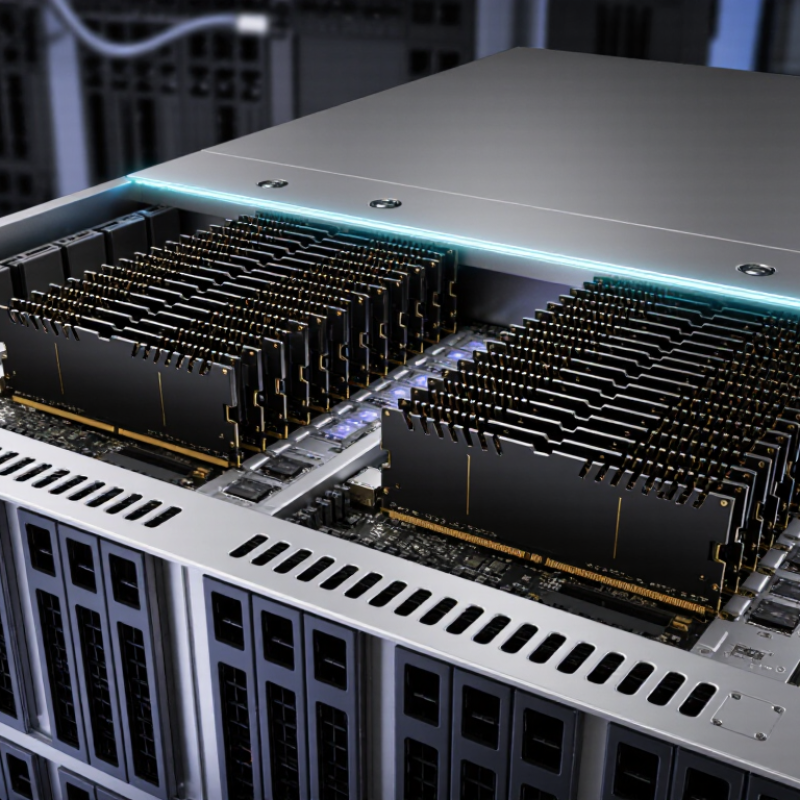
China Top DDR5 Memory for Data Center Suppliers?

DDR5 Memory Requirements for Modern Data Centers

China Top DDR5 Memory for Data Center Suppliers?

Modern data centers need DDR5 memory that delivers more than impressive speed. High-bandwidth workloads, virtualization, analytics, and artificial intelligence can quickly exhaust older memory platforms. DDR5 improves data transfer rates and supports higher module capacities. That matters when one server handles many virtual machines. Capacity still comes first.

In practical deployments, I check registered memory support, error-correcting capability, module compatibility, and firmware validation. A fast module is not useful if it causes boot failures or unstable workloads. Data center memory should protect against common bit errors and support continuous operation. It also needs reliable thermal behavior inside dense racks. Small details matter.

Supplier evaluation requires testing evidence, traceable production, and consistent quality between batches. Ask for electrical specifications, operating temperature ranges, lifecycle information, and platform validation records. Confirm whether the supplier can support replacement modules years later. Supply continuity is often overlooked. It should not be.

I have seen purchasing teams focus too heavily on peak frequency. That approach can miss capacity limits, power use, or motherboard restrictions. A better assessment uses real workloads, including database queries and virtual machine density. Results may differ from laboratory figures. That is normal. Leave room for review.

Key Features of China’s Top DDR5 Memory Suppliers

China’s leading DDR5 memory suppliers for data centers are judged by more than density and price.

Their strongest feature is stable RDIMM production, with registered modules designed for server platforms and high memory capacity. Many suppliers support ECC, helping detect and correct common data errors during continuous workloads.

Reliable suppliers publish module specifications, chip origin records, and test conditions. This transparency matters when engineers compare performance beyond laboratory claims.

In practical evaluations, I look for stress testing at high temperatures, repeated boot cycles, and long-duration memory loads.

A clean result is useful. Yet one test is never enough.

Another key feature is power and thermal control. DDR5 modules use integrated power management, so voltage behavior affects reliability, heat, and energy use. Experienced suppliers offer thermal sensors, carefully selected components, and firmware compatibility support.

They may also adjust capacities, ranks, and form factors for different server designs. Delivery discipline is equally important. A capable supplier keeps safety stock, documents revision changes, and provides traceable quality reports.

Some claims still need closer review, especially when test data excludes mixed-module operation.

Tips: Ask for ECC details, operating temperature ranges, burn-in records, and failure-rate data. Request samples from the planned production batch. Test them with your exact CPU, motherboard, workload, and airflow pattern. Small differences can become expensive. Keep a second source under evaluation; supplier capability can change with component availability.

Leading Chinese DDR5 Memory Manufacturers and Product Types

China’s DDR5 memory sector now serves data centers through module assembly, testing, and component manufacturing. Leading Chinese suppliers commonly provide ECC RDIMM products for servers, with capacities ranging from 16GB to 128GB. Higher-density 3DS RDIMM options support virtualization and memory-intensive analytics.

Some manufacturers also offer ECC UDIMM and SODIMM products for edge servers, workstations, and compact industrial systems. Their DDR5 modules usually include on-die error correction, registered buffering, PMIC control, and SPD hubs. These features help maintain signal stability at higher speeds. Common speed grades include 4800MT/s, 5600MT/s, and 6400MT/s, depending on platform support.

In practical sourcing, I would inspect burn-in records, thermal testing, firmware compatibility, and batch consistency. A clean specification sheet is not enough. Supplier audits should review component traceability and replacement procedures. Chinese manufacturers can offer flexible capacities and competitive delivery schedules, but qualification results may vary between production batches. That point deserves attention. Buyers should validate modules inside their exact server platforms before volume orders. Support quality also matters, especially when mixed memory configurations create unstable performance. Detailed test reports, warranty terms, and lifecycle planning provide stronger evidence than advertised speed alone.

How to Evaluate DDR5 Suppliers for Data Center Deployment

Choosing China-based DDR5 memory suppliers for data centers requires more than comparing prices. Start with platform compatibility. Check supported capacities, registered DIMM design, ECC behavior, memory speed, and power management components. A module that works in a desktop may fail during sustained server workloads.

Request qualification records for your exact server model. Review burn-in results, temperature ranges, failure rates, and firmware compatibility. Ask how suppliers trace memory chips across production batches. Clear serial-number records matter when a rack shows intermittent errors. Documentation should be specific, not promotional.

Tips: Test samples under real workloads, including virtualization, database activity, and overnight stress cycles. Confirm delivery schedules, replacement procedures, warranty limits, and technical response times. Keep spare modules from the same validated batch. Small details matter.

Reliability also depends on manufacturing consistency and supply continuity. Evaluate factory audits, inspection methods, packaging quality, and anti-static handling. Ask whether capacity changes require fresh validation. A cheaper module can become expensive after repeated troubleshooting. I have seen evaluations focus too heavily on benchmark speed. That was a mistake. Stable error correction and predictable availability usually matter more. Still, no supplier is perfect; even strong test results cannot remove every field risk. Require transparent corrective-action reports when failures occur, and record each test condition before approving volume deployment.

Procurement, Compatibility, and Quality Considerations

China Top DDR5 Memory for Data Center Suppliers?

Procurement begins with platform compatibility, not the lowest quotation. TrendForce estimated DDR5 server DRAM penetration could reach about 40% in 2024. Buyers should verify each module against the server manufacturer’s qualified list. Check capacity, speed, voltage, rank, and ECC type. RDIMM and LRDIMM are not interchangeable. A 5,600 MT/s module may operate below its rated speed when mixed with slower modules. That detail often appears after installation.

Quality requires evidence beyond a certificate. Ask suppliers for lot traceability, burn-in records, error-screening results, and failure-rate data. JEDEC’s JESD79-5 standard defines DDR5 requirements, but compliance alone does not guarantee stable operation in every motherboard. Independent testing should cover thermal cycling, repeated boot cycles, and sustained memory workloads. The Uptime Institute’s 2024 survey continued to identify human and system failures as major outage contributors. Memory selection deserves the same operational discipline. A spreadsheet can still lie.

Tips: Request a sample lot before volume purchasing. Test the exact firmware and BIOS settings. Keep matched modules within each memory channel. Require a written replacement process for early failures. I would also retain several spare modules onsite, although that decision should follow failure history, not habit. Supplier responsiveness matters when a rack is waiting.

China Top DDR5 Memory for Data Center Suppliers: Procurement, Compatibility, and Quality Considerations

The chart shows JEDEC DDR5 data-rate classes and their theoretical bandwidth per 64-bit memory channel. Actual server performance depends on CPU memory support, DIMM population, ECC/RDIMM compatibility, firmware validation, thermal design, and quality-control testing. The bandwidth values are calculated as data rate × 8 bytes per transfer.

FAQS

Why is DDR5 memory important for modern data centers?

DDR5 supports higher transfer rates and larger module capacities. It helps servers manage virtualization, analytics, and artificial intelligence workloads.

Should capacity or speed receive more attention?

Capacity usually comes first. A very fast module is less useful when virtual machines quickly consume available memory.

What type of DDR5 memory suits server platforms?

ECC RDIMM modules commonly suit servers. Available capacities may range from 16GB to 128GB, depending on platform support.

Are RDIMM and LRDIMM modules interchangeable?

No. They use different buffering designs and require specific motherboard support. Confirm compatibility before installation.

Which specifications should buyers verify?

Check capacity, speed, voltage, rank, ECC type, firmware, and registered memory support. Also review the qualified module list.

Does a higher rated speed guarantee better performance?

No. A 5,600 MT/s module may run slower beside lower-speed modules. Real database and virtual machine tests matter more.

How can buyers assess supplier quality?

Request lot traceability, burn-in records, error-screening results, thermal tests, and failure-rate data. A clean specification sheet is not enough.

What testing should happen before a volume order?

Test a sample lot in the exact server platform. Repeat boot cycles and run sustained workloads under realistic thermal conditions.

Why do firmware and BIOS settings matter?

Memory may fail to boot or become unstable without correct firmware settings. Small configuration details can create expensive delays.

Should data centers keep spare memory modules onsite?

Several matched spare modules can reduce replacement delays. Still, spare quantities should follow failure history, not simple habit.

Conclusion

China has become an important source of DDR5 memory for data center applications, offering solutions designed to meet the growing demands of cloud computing, artificial intelligence, virtualization, and high-performance analytics. Modern data centers require higher bandwidth, greater capacity, improved energy efficiency, and strong reliability, making DDR5 a suitable choice for upgrading server platforms. Chinese suppliers commonly provide a range of products, including registered DIMMs, load-reduced DIMMs, error-correcting memory modules, and different capacity and speed options for enterprise environments.

When evaluating suppliers, data center operators should consider manufacturing capabilities, quality-control procedures, product consistency, technical support, delivery capacity, and long-term supply stability. Procurement teams must also confirm compatibility with server processors, motherboards, firmware, memory configurations, and required error-correction standards. Clear validation procedures, qualification samples, warranty terms, traceability, and compliance documentation are essential before large-scale deployment. A careful comparison of performance, total ownership cost, service capability, and future upgrade potential can help organizations select reliable DDR5 solutions for secure and efficient data center operations.

Madeline

Madeline

Madeline is a dedicated marketing professional with a wealth of expertise in our company's core offerings. With a keen understanding of the industry, she brings a unique perspective to her role, consistently delivering high-quality content that highlights the superior aspects of our products. As......